BAAJA is the Senate's permitting deal: a 417-page bill that makes federal approvals
faster and harder to undo. It puts short clocks on agencies and on lawsuits, limits what
a court can do when a challenger wins, freezes issued permits with Treasury money behind
the freeze, builds a federal backstop for big power lines, and makes large data centers
pay for the grid costs they cause. It narrows state water reviews, historic preservation
reviews, and endangered species reviews along the way. It is technology-neutral on its
face. It has not had a hearing, and its text is expected to change.
Sen. Shelley Moore Capito introduced it on September 30, 2026, with Sens. Mike Lee,
Sheldon Whitehouse, and Martin Heinrich, the chairs and ranking members of the two Senate
committees that own the subject. As of October 1, the only recorded action is referral
to committee. Capito's stated goal, a claim, is for it to be "the first vote when we come
back" after the November 3 election. If it does not pass before the 119th Congress ends
in January 2027, it dies.
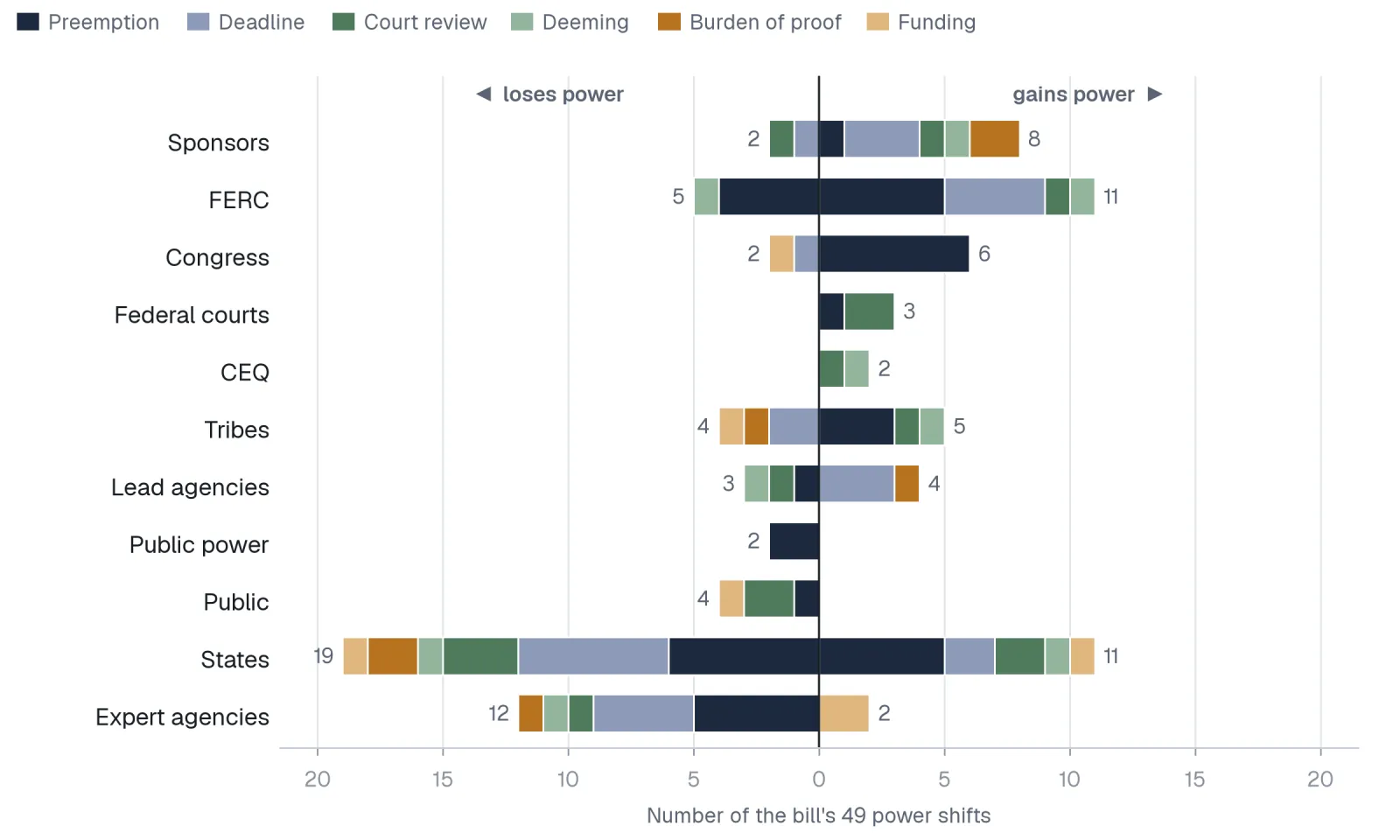
The bill moves leverage from people outside a permit to the people who hold or want one,
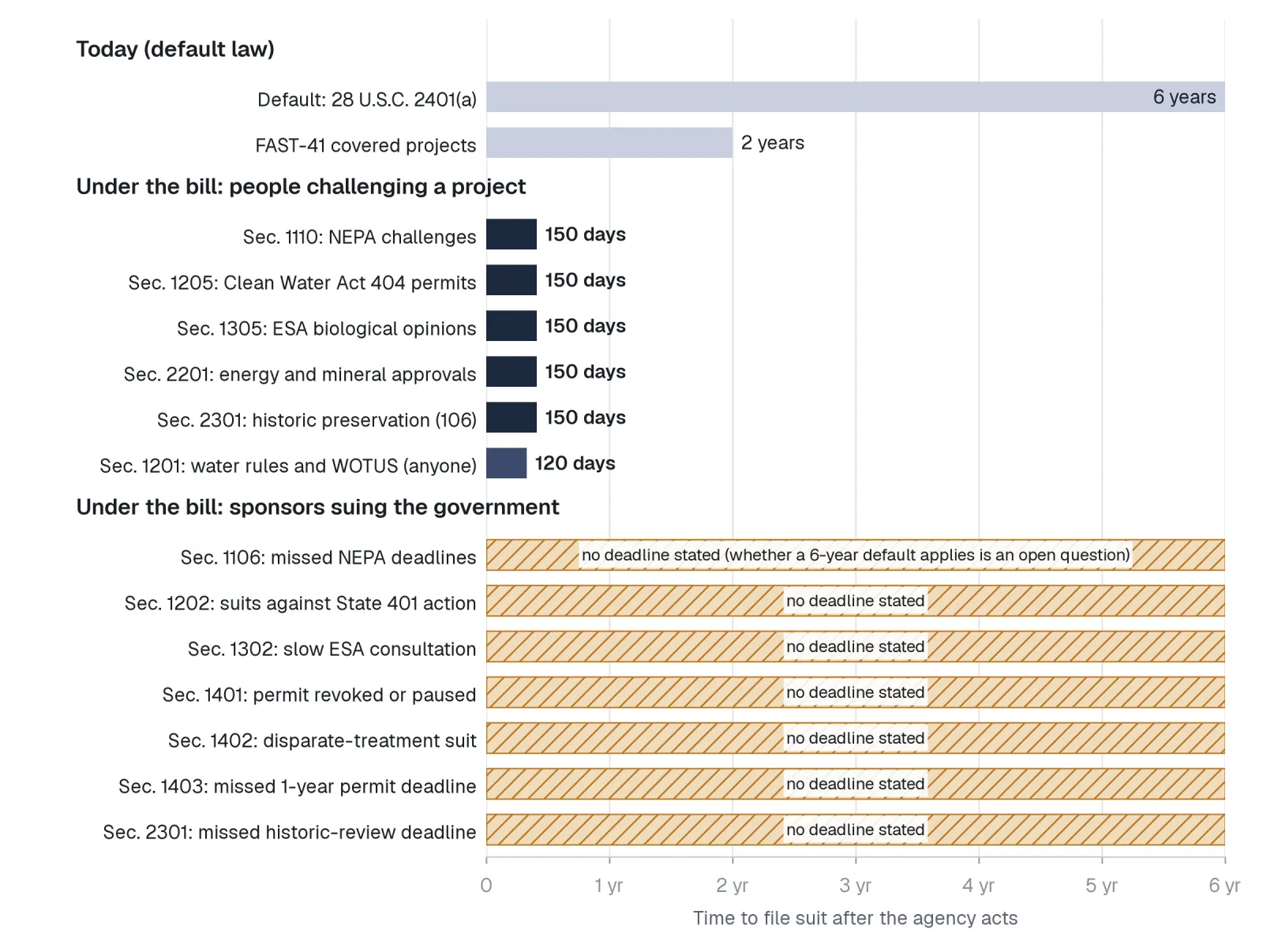
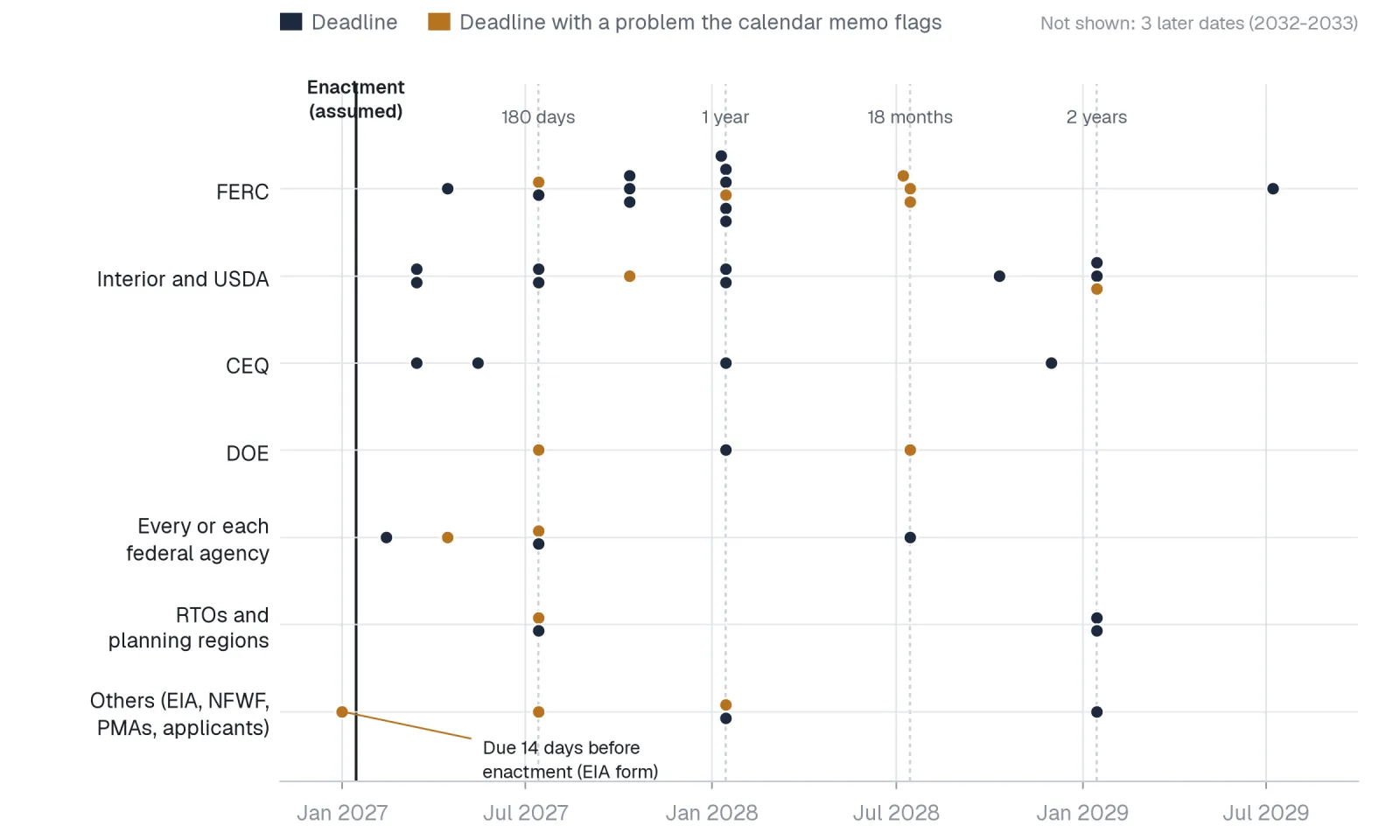
using three tools. Clocks: agencies get deadlines that only the project
sponsor can enforce in court, and challengers get 150 days to sue.
Remedies: for a NEPA violation, a court may only send the approval back
to the agency, and the project can keep going while the agency fixes it.
Certainty: agencies may not pull permits already issued except in five
narrow cases, and a sponsor who wins in court collects 25 to 50 percent of its costs from
the Treasury's Judgment Fund.
Is this a data-center bill?
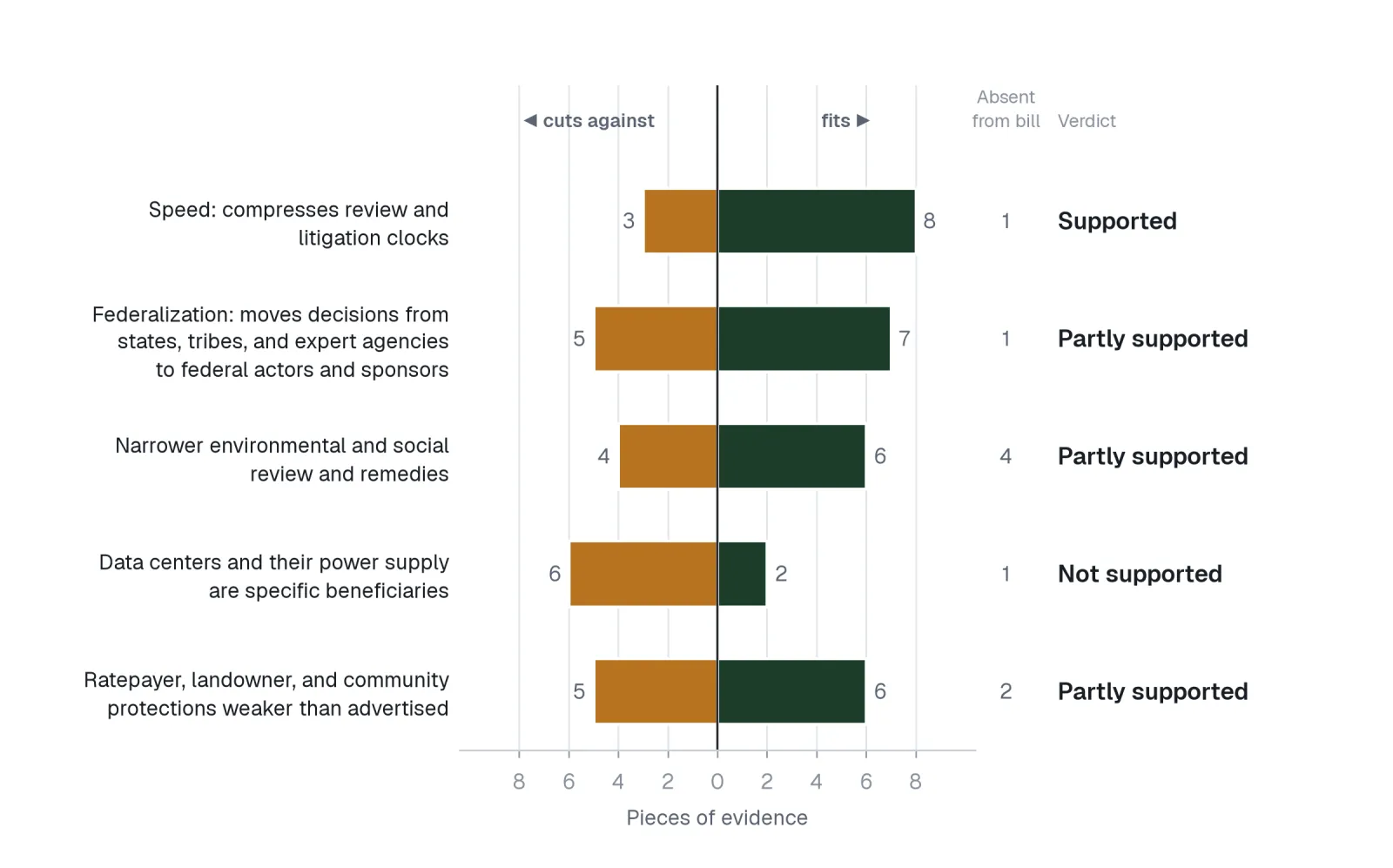
Partly. BAAJA speeds up the lines, pipelines, and plants data centers
depend on: it compresses clocks, moves water-permit and transmission decisions from states
toward federal agencies and courts, and limits what a winning challenger can get. It never
requires anyone to study what a wave of large new loads does to emissions, water, or nearby
communities. But it does almost nothing to speed the data centers themselves, and the only
sections that name them make them pay more and give states new power over them.
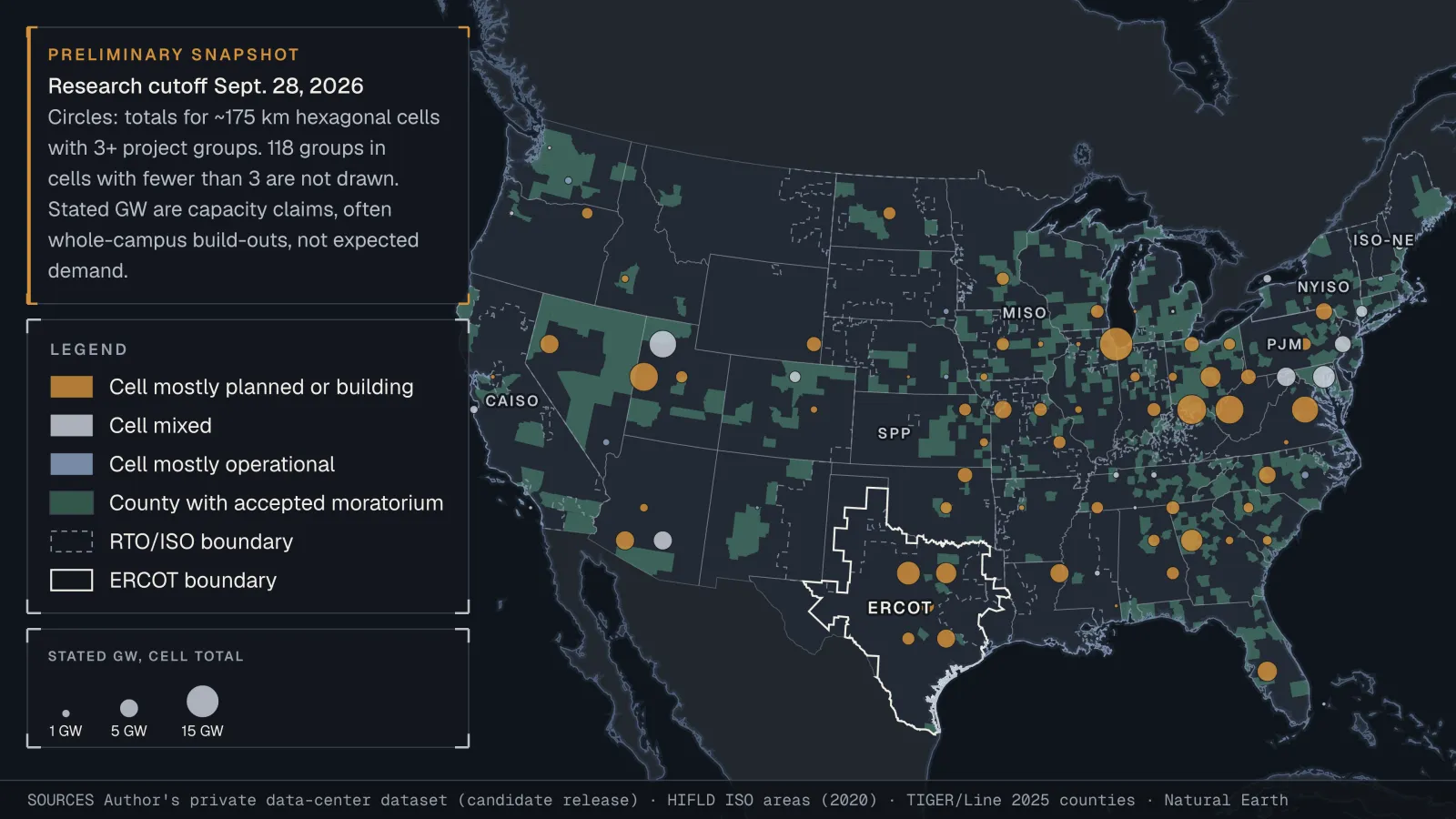
Data-center demand is the bill's main source of momentum, not its main
beneficiary.